
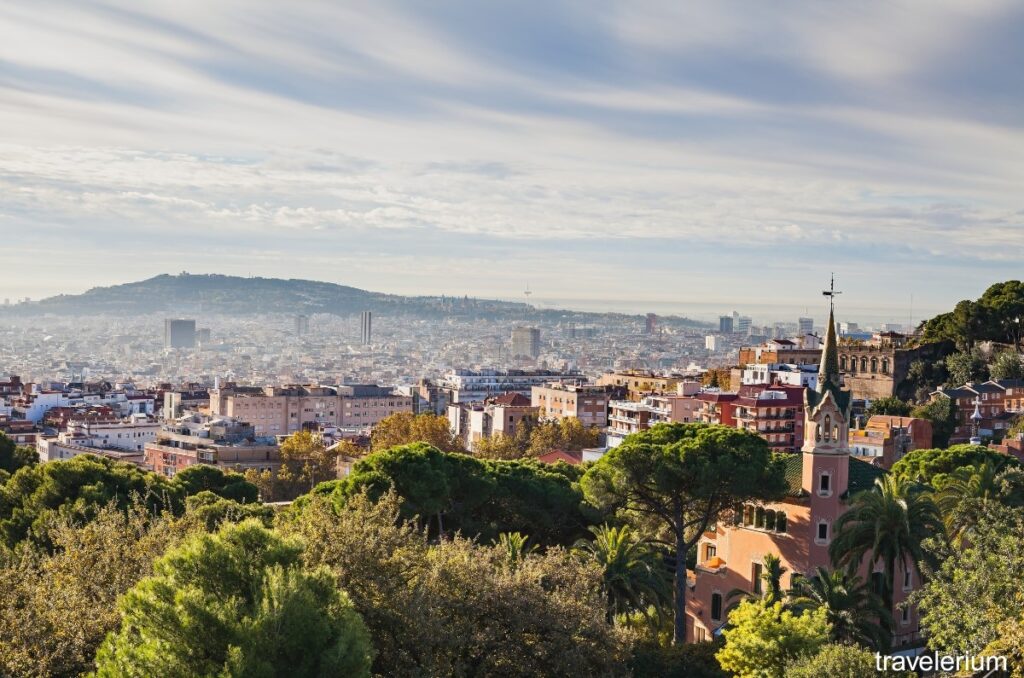
Perched high above the rooftops of Barcelona, with the shimmering Mediterranean stretching to the horizon and the iconic Sagrada Família piercing the skyline below, the Bunkers del Carmel offers what many locals and seasoned travelers consider the single greatest panoramic view in the entire city.
Forget the cable car to Montjuïc. Skip the elevator to the top of the Sagrada Família tower. For a raw, 360-degree, utterly breathtaking view of Barcelona — and for absolutely nothing — the Bunkers del Carmel Barcelona is in a category entirely its own.
Part history lesson, part hidden gem, part Instagram pilgrimage, this former anti-aircraft battery perched atop Turó de la Rovira has become one of the most beloved and visited spots in the Catalan capital. But despite its growing popularity, it retains an unmistakable magic — especially at golden hour, when the light turns the entire city amber and the crowds fall quiet.
This guide covers everything you need to know: the history behind the site, the best views in Barcelona you’ll find here, practical tips, and detailed information on the Bunkers del Carmel how to get there so your visit goes smoothly.
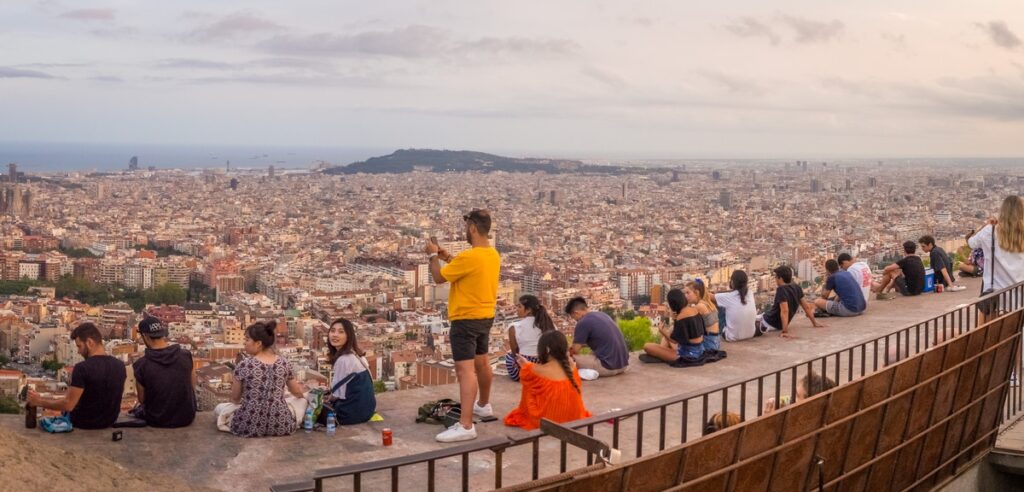
Table of Contents – Bunkers del Carmel
A Brief History: From War Ruins to Urban Icon
To truly appreciate the Bunkers del Carmel, it helps to understand what you’re actually standing on.
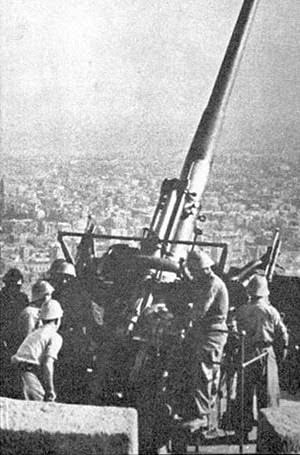
During the Spanish Civil War (1936–1939), the Republican government constructed an extensive network of anti-aircraft batteries across the hills surrounding Barcelona. The city was one of the first in European history to be systematically bombed from the air, targeted by Nationalist and fascist aviation forces supporting Franco. The installation on Turó de la Rovira — the hill officially known as Carmel Hill — was one of the most strategically important of these batteries.
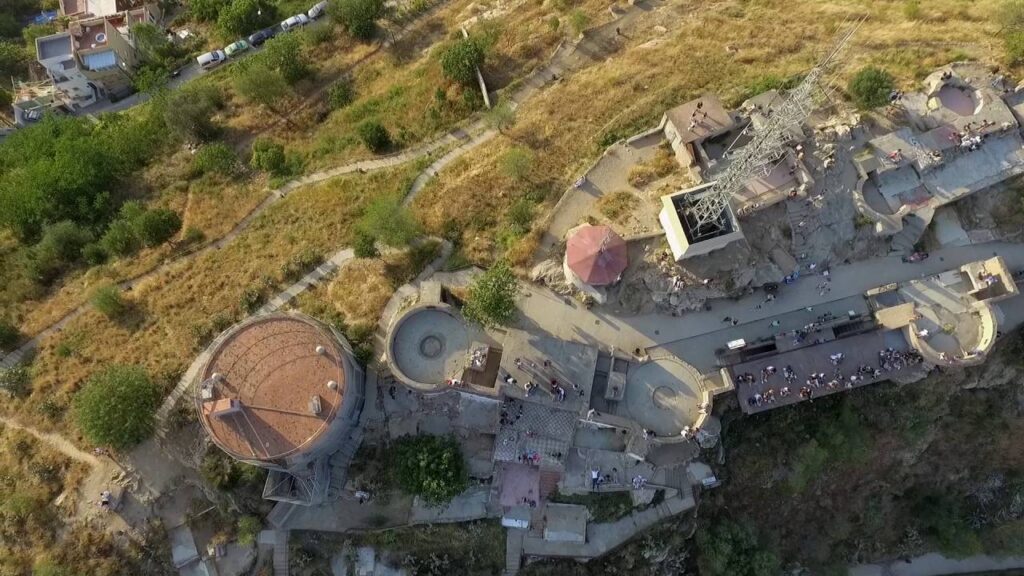
The concrete platforms, bunkers, and emplacements you see today were built to house anti-aircraft guns aimed at protecting the city below. After the war ended and Franco’s forces took control, the site was repurposed. Throughout the 1940s and into the latter half of the 20th century, it became something quite different: a shantytown.
Hundreds of families, many of them internal migrants arriving in Barcelona from other parts of Spain during the post-war economic hardship, built informal housing directly on and around the old military structures. Known locally as the Turó de la Rovira barraques (shacks), this informal settlement persisted until the early 1990s, when residents were relocated as part of Barcelona’s urban renewal projects ahead of the 1992 Olympic Games.
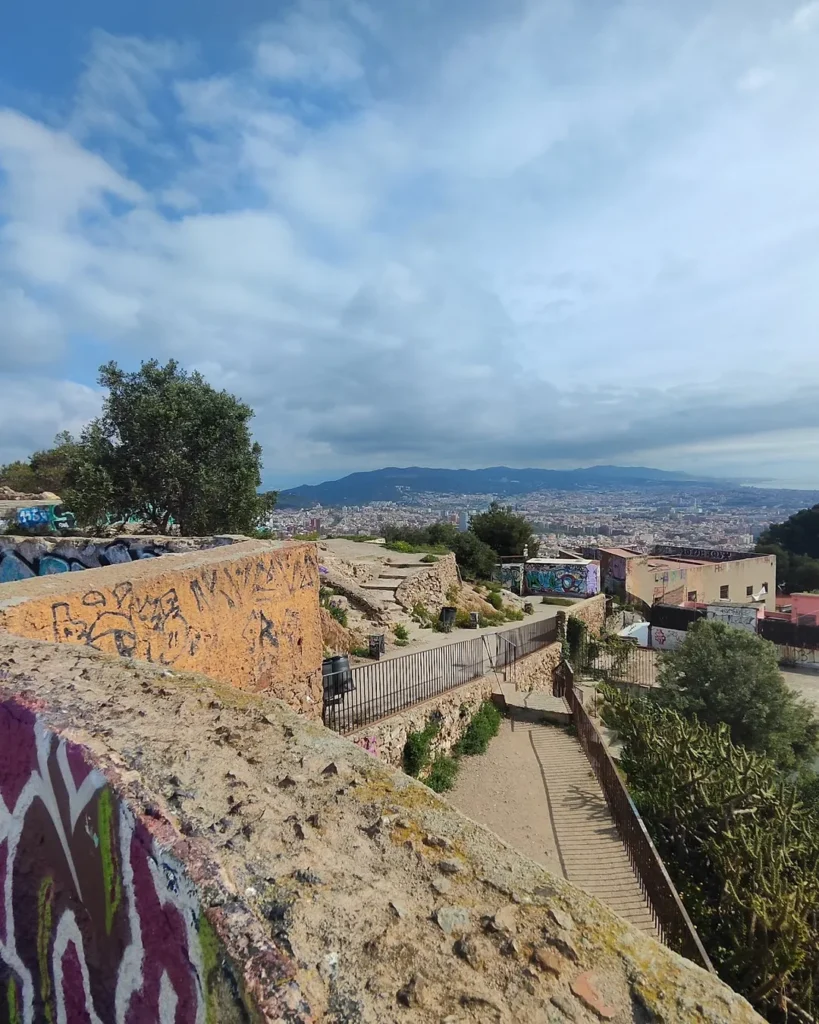
What remained after the clearance were the exposed military structures — the concrete bunkers, gun platforms, and ruined walls — along with sweeping views that had always been there but were previously hidden behind informal housing. The city eventually recognized the historical and cultural value of the site and designated it a protected heritage space. Today, it is maintained as an open-air monument and one of the best free things to do in Barcelona.
The Views: Why Turó de la Rovira Is Unmissable
Let’s talk about what actually makes this place so special: the views.
At 262 meters above sea level, Turó de la Rovira viewpoint sits higher than Park Güell and offers a substantially wider, less obstructed panorama. From the top of the concrete gun emplacements, you can see virtually the entire city spread out below you in extraordinary detail.
Looking south, the geometry of the Eixample grid — Gaudí’s rational city plan — unfolds like an architect’s model. The Sagrada Família dominates the mid-ground, its spires unmistakable even from this distance. On clear days, you can follow the coastline all the way to the Llobregat Delta and, in the far distance, the mountains of the Costa Daurada.
Looking east and southeast, the sea takes over. The Mediterranean glitters on bright days, merging almost seamlessly with the sky at the horizon. The port of Barcelona, the W Hotel sail, and the neighborhood of Barceloneta are all visible. On exceptionally clear days, the Balearic Islands are said to be visible — though you’ll need extraordinarily good conditions for that.
Looking west, the hills of Collserola form a green backdrop behind the city, with the Tibidabo amusement park and its distinctive church perched at the summit. Closer in, the towers of Camp Nou stadium are visible.
Looking north, the entire working-class neighborhood of Gràcia spreads below, and beyond it, the northern districts of the city extend toward the Besòs river delta.
What makes the Barcelona panoramic views from here uniquely satisfying compared to other viewpoints is the combination of height, angle, and freedom. There are no fences constraining your view, no glass panels distorting the light, no ticket booth setting expectations. You stand on raw concrete that once housed weapons of war, and the entire city — vibrant, chaotic, beautiful — unfolds below you without mediation.
When to Go: Timing Your Bunkers del Carmel Visit for Maximum Impact
The Bunkers del Carmel is worth visiting at almost any time of day, but certain moments are genuinely transformative.
Sunrise is arguably the most dramatic. Arriving before first light, you’ll often find the city wrapped in a soft blue haze, with the lights of the streets gradually dimming as the sky brightens over the sea. Crowds are minimal at this hour, and the experience is almost meditative.
Golden hour before sunset is the most popular time, and for good reason. As the sun drops toward Collserola in the west, it casts warm amber and rose light across the entire city. The Sagrada Família practically glows. This is prime photography time, but arrive at least 90 minutes before sunset to secure a good spot on the concrete platforms, particularly on weekends between April and October.
After dark offers yet another dimension. The illuminated city stretches below like a circuit board, with the lit spires of the Sagrada Família and the moving headlights on Gran Via creating a cinematic atmosphere. Many locals bring wine, blankets, and friends for informal gatherings at this hour.
Midday in summer is the one time to approach with caution. The exposed hilltop offers zero shade, temperatures can be brutal between June and August, and the harsh overhead light flattens the view photographically. If you visit in summer, bring water, sunscreen, and a hat — or simply save the visit for evening.
Bunkers del Carmel: How to Get There
The Bunkers del Carmel how to get there question is one of the most commonly asked, and the honest answer is that the access requires a little effort — which is part of what keeps the atmosphere special.
By Metro + Walking (Recommended)
The most popular approach combines metro travel with a scenic uphill walk.
- Take Metro Line 5 (Blue) to El Carmel station or Guinardó | Hospital de Sant Pau station
- From El Carmel station, follow Carrer de Mühlberg uphill — the walk takes approximately 15–20 minutes on a moderately steep path
- Look for signs to Turó de la Rovira — signage has improved significantly in recent years
- The final approach is on unpaved paths, so comfortable walking shoes are strongly recommended
By Bus
Several bus routes pass through the Carmel neighborhood:
- Bus 24 from Passeig de Gràcia stops near the base of the hill
- Bus 119 offers a stop closer to the summit path
- Check the TMB (Transports Metropolitans de Barcelona) app for real-time routing from your location
By Taxi or Rideshare
Taxis and apps like Cabify or Uber can drop you at the base of the final walking path — vehicles cannot reach the summit itself. This is a convenient option if you’re visiting at night or in poor weather.
On Foot from Gràcia or Park Güell
For the adventurous, the Bunkers can be reached on foot from the Gràcia neighborhood (approximately 45 minutes of uphill walking) or combined with a visit to Park Güell (roughly 30–40 minutes between the two sites along pleasant residential streets and paths). This makes for an excellent half-day itinerary.
Important Notes on Access
- The site is free and open to the public at all hours
- There are no facilities on-site — no toilets, no food vendors, no seating
- The paths after dark are unlit and uneven — bring a phone torch if visiting at night
- There is no parking at or near the summit; driving is not recommended
What to Bring: Practical Packing Tips
Given the lack of facilities on-site, a little preparation goes a long way:
- Water — especially in warm months; there is nowhere to buy drinks on the hill
- Snacks — many visitors bring picnic supplies from the supermarkets in the Carmel neighborhood below
- Sunscreen and a hat — the exposed hilltop shows no mercy in summer
- A blanket or mat — if you plan to stay for sunset or into the evening, the concrete is cold and hard
- Comfortable footwear — trainers or walking shoes are ideal; avoid sandals for the unpaved paths
- A jacket — even in summer, the hilltop catches wind and evenings cool quickly
- A fully charged phone or camera — the views genuinely demand documentation
Free Things to Do in Barcelona: Where Bunkers del Carmel Fits
One of the most compelling things about the Bunkers del Carmel is that it costs absolutely nothing — making it one of the very best free things to do in Barcelona in a city that can otherwise be expensive.
Barcelona has no shortage of free viewpoints and outdoor spaces, but the Bunkers occupy a unique position:
- Park Güell offers wonderful views but charges an entrance fee for the monumental zone and can feel crowded and managed
- Montjuïc is spectacular but requires a cable car or significant walking investment
- Tibidabo has famous views but is primarily an amusement park with associated costs
- Columbus Monument and Cathedral terraces offer glimpses of the city but nothing approaching 360-degree panoramas
The Bunkers del Carmel delivers a premium experience — arguably the best panoramic view in the city — entirely for free, which is why it resonates so strongly with both budget travelers and those who simply value authenticity over polish.
Tips for Responsible Visiting
The Bunkers del Carmel’s growing popularity has brought some challenges. The site is located in a residential neighborhood, and residents have occasionally expressed frustration with late-night noise, litter, and large groups.
A few guidelines for respectful visiting:
- Take your rubbish with you — there are limited waste bins; pack out what you bring in
- Keep noise levels reasonable in the late evening, mindful of residents below
- Stay on established paths — the hill’s vegetation and historical structures can be damaged by off-path wandering
- Arrive early on weekends during peak season if you want space and quiet on the platforms
Combining Bunkers del Carmel With Other Attractions
The Bunkers pair beautifully with several nearby Barcelona highlights:
- Park Güell (20–30 minutes on foot or a short taxi ride): Combine both viewpoints for a full morning of elevated Barcelona exploration
- Gràcia neighborhood: Descend into this charming, village-like barrio for lunch or a coffee after your visit
- Hospital de Sant Pau: One of Barcelona’s most underrated UNESCO World Heritage sites, a 15-minute walk from the Bunkers
- La Sagrada Família: Having seen it from above at the Bunkers, visiting the basilica itself makes for a satisfying contrast of perspectives
Final Thoughts: Why the Bunkers Del Carmel Stays With You
There is a particular kind of travel experience that combines beauty, history, accessibility, and authenticity in a way that simply cannot be manufactured or packaged. The Bunkers del Carmel Barcelona is exactly that kind of place.
You stand on the ruins of a war you may only know from history books, above a city that has reinvented itself repeatedly over two thousand years, looking out at a sea that connected civilizations. The city below hums and glitters and breathes. Somewhere down there, the Sagrada Família reaches upward as it has for nearly 150 years. The Mediterranean catches the light and throws it back.
No ticket. No queue. No glass between you and the view.
If you visit Barcelona and see only one panoramic viewpoint, make Bunkers del Carmel the one. The Turó de la Rovira viewpoint will almost certainly become one of the most memorable moments of your entire trip.
Bunkers del Carmel FAQ
Are tickets needed?
No. Entry is free.
What are the opening hours?
Opening hours can vary, so check Barcelona’s official visitor information before you go.
Is it currently open?
Hours and access may change. Check current local updates before visiting.
How do you get there?
Take public transport to the Carmel area, then walk uphill to the site.
How long is the walk up?
Expect a steep uphill walk of about 15–30 minutes, depending on your starting point.
Is it safe at night?
The area can be quiet and poorly lit after dark. Visit with others and take care on the walk.
What time is sunset?
Sunset varies by season. Check the local forecast for the date of your visit.
Is it worth visiting?
Yes—especially for the panoramic views over Barcelona.
Where’s the best photo spot?
The open viewpoints along the top offer the widest city views.